
Why European Chip Makers Are Wary of ‘Nationalist’ Policies After Trump’s Win
Following Donald Trump’s re-election, a powerful wave of concern has emerged among European chip makers. The CEOs of Europe’s top three chip manufacturing giants – Infineon, STMicroelectronics, and NXP Semiconductors – have come forward, warning that the push for “nationalist” industrial policies threatens to fragment the global semiconductor industry.
Speaking at an electronics conference in Munich, the leaders of these companies voiced their worries about a growing trend of ‘isolationism’ in semiconductor production.
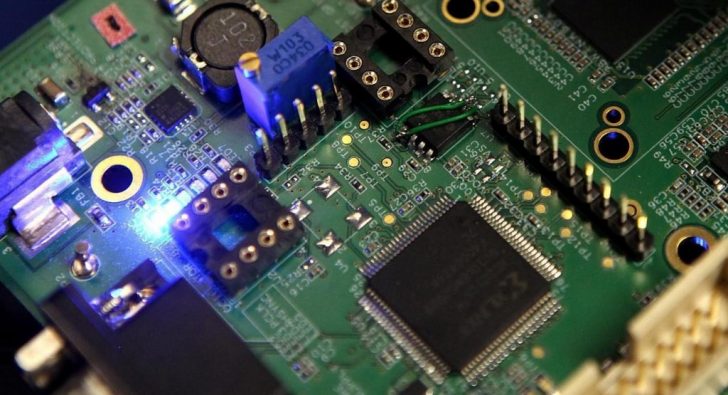
GTN / European chip makers are finding themselves caught in a tightening squeeze as the U.S., China, and the EU each demand a greater level of local production to reduce reliance on foreign sources.
According to the CEOs, this escalating trend of nationalist policies risks pulling the global chip industry apart, a move they see as short-sighted and costly. As Kurt Sievers, CEO of NXP, put it, no single country or region can truly dominate the chip industry without relying on others.
European Chip Makers Confront ‘Fragmenting’ Supply Chains
The term “fragmentation” echoed heavily through the Munich conference hall as Infineon’s CEO Jochen Hanebeck laid out the situation. European chip makers are watching as their once interconnected supply chains are being pulled apart by political pressures and tariffs, making operations more challenging than ever.
Hanebeck warned that these pressures to “regionalize” semiconductor production are increasingly shifting the industry away from global collaboration. Tariffs loom on the horizon, adding yet another layer of uncertainty for companies accustomed to open markets.
For these companies, tariffs and nationalist pressures are not mere inconveniences. They represent significant shifts that could reshape the entire industry. Europe’s top chip makers, which have thrived on international trade, now face the possibility of having to build new supply chains and facilities to comply with region-specific requirements.
However, this shift comes at a cost – especially regarding engineering resources and time – both of which are essential in a rapidly evolving field like semiconductors. The leaders of Infineon, STMicroelectronics, and NXP worry that the energy spent on adjusting to fragmented policies could slow their ability to innovate.
Trump’s Re-election Fuels European Giant Chip Makers’ Worries
Donald Trump’s election for a second term has amplified these concerns for European chip makers. His administration’s focus on making the U.S. more self-sufficient in critical industries, including semiconductors, is seen by many as a signal that the world’s biggest economies may further entrench themselves into nationalistic policies.
Chery highlighted that efforts to establish localized supply chains to serve specific regions – China for China, the West for the West – are not only expensive but inefficient. He noted that STMicroelectronics has faced growing costs tied to material and engineering demands as the company attempts to adjust its operations to align with these regionalized policies.
Reuters / Jean-Marc Chery, CEO of STMicroelectronics, described this trend as a “return to economic borders” that could derail the global semiconductor market’s collaborative foundation.
This divergence in production strategies forces companies like STMicroelectronics to invest in parallel supply and production processes – draining resources that could otherwise be funneled into innovation. The company is especially concerned about the electric vehicle market in China, which remains a bright spot for semiconductor demand even as other markets stagnate.
So, for European chip makers, the financial impact of nationalist policies is only part of the problem. They are also concerned about the toll on innovation. Developing chips for the automotive industry, power management, and artificial intelligence requires substantial research and development efforts, which are more effectively conducted within a global framework. Sievers from NXP emphasized that the interdependence of the chip industry means that isolationist policies will only hinder technological advancement.
These giant chip makers fear that focusing on regionalized production will sap the industry of its innovative potential. It could ultimately result in slower progress across fields that rely heavily on new chip technologies, from electric vehicles to advanced AI systems.
More in Tech
-
`
 Rihanna’s Net Worth Drops After Failed Luxury Brand Collaboration
Rihanna has always been a trendsetter, but not every business move hits the mark. The pop icon reportedly faced a major...
November 4, 2025 -
`
 Maine Travel Guide | Safe Coastal Towns, Beaches & Fresh Seafood
When the leaves start to turn and the summer crowds fade, travelers begin looking for quieter escapes—places where the scenery speaks...
October 28, 2025 -
`
 Are Tech Billionaires’ Doomsday Plans a Sign of Something Bigger?
The idea of tech billionaires preparing for the end of the world sounds like something straight out of ‘Don’t Look Up’....
October 21, 2025 -
`
 Taylor Swift Delivers Bold Statement on Cancel Culture Through Music
Taylor Swift never shies away from turning controversy into art. With her latest song “Cancelled!” from her twelfth studio album “The...
October 15, 2025 -
`
 Sean Combs Mentored Inmates in Jail, Teaching Them to Think Like a Mogul
Sean “Diddy” Combs spent part of his recent time in jail teaching fellow inmates about business, entrepreneurship, and personal development. The...
October 7, 2025 -
`
 Why Istanbul Is the New Celebrity Hotspot for Style and Wellness
Celebrities are constantly reinventing themselves—sometimes through a new sound, other times through a striking new look. But the latest wave of...
October 1, 2025 -
`
 Is Apple Ditching the SIM Card With Its Latest iPhone?
For years, sliding a tiny SIM card into a phone has been the first step to getting connected. Apple now appears...
September 23, 2025 -
`
 Why New York Nightlife Keeps Attracting Visitors Worldwide
New York comes alive after dark in a way few places on earth can match. The city never limits itself to...
September 16, 2025 -
`
 How Celebrities Are Taking Over the Business World
The definition of celebrity success has expanded well past awards and sold-out tours. Today, many Hollywood names are equally focused on...
September 9, 2025
More From Todaysnyc
-
 What Is Workplace Culture? Understanding Its Meaning & Importance
“Workplace culture” is a term frequently seen in job postings, company websites, and professional conversations. Despite its prevalence, it’s often misunderstood...
CultureApril 1, 2026 -
 Why Surging Oil Prices Won’t Spark a U.S. Inflation Nightmare
Rising oil prices have rattled financial markets and raised fresh concerns about inflation across the United States. Since the start of...
BusinessMarch 25, 2026 -
 This 112-Acre Florida Island Inspired Jimmy Buffett’s ‘Cheeseburger in Paradise’
Off the southwest coast of Florida sits a small island that feels refreshingly untouched by modern development. Cabbage Key may be...
Luxury & Life StyleMarch 16, 2026 -
 The Group Chat Rules Nobody Talks About (But You Should Follow)
Group chats have quietly reshaped daily communication. Plans for dinner, updates about a child’s birthday, collaboration on a work project, and...
TechMarch 9, 2026 -
 How the Bay Area Skate Culture Started
For those who grew up in the 1980s, Friday nights often meant the roller rink: dimmed lights, pulsing music, and skaters...
CultureMarch 5, 2026
You must be logged in to post a comment Login